10. Stonehenge, Amesbury, UK
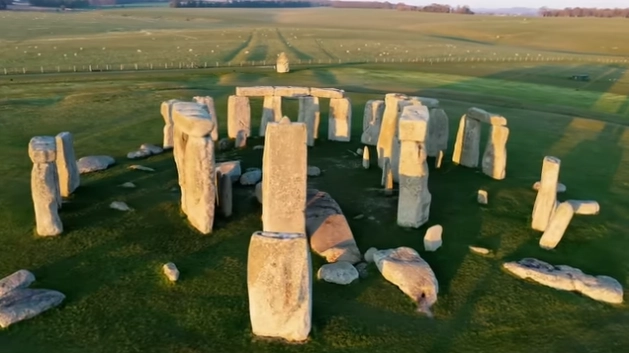
Stonehenge features concentric rings of standing stones within a ditch enclosure. Its outer circle consists of large sandstone blocks, precisely joined by lintels, enclosing inner bluestones and an innermost sandstone ring. Aligned with solstices, it likely served astronomical, religious, and burial purposes.
Constructed from 3100 to 1600 BC, its megaliths were raised around 2600–2400 BC. While major stones came from 20–180 miles away, the altar stone was recently traced to northeastern Scotland—460 miles distant—highlighting extraordinary Neolithic transport capabilities via logs or rivers.
9. The Medicine Wheel, Bighorn National Forest, Wyoming, USA
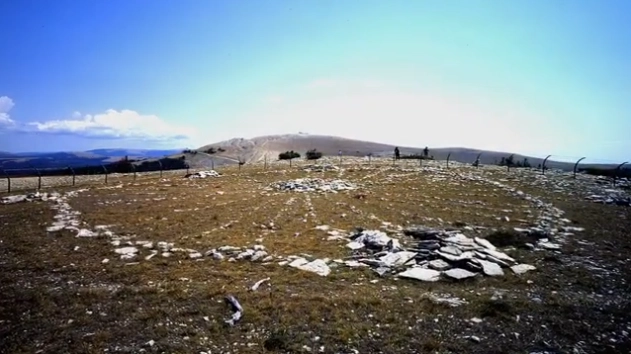
The Crow Indians state the stone circle predates their settlement, its builders unknown. Situated below Medicine Mountain's peak, it spans 80 feet with 28 spokes radiating from a central ring, plus six smaller circles. Among North America's roughly 70 medicine wheels—mostly in Alberta—the Bighorn Medicine Wheel is the southernmost known. The oldest, in Bassano, was built by the Blackfoot Nation around 3200 BC.
Dating the Bighorn wheel is difficult; carbon-dating found only a 220-year-old wood fragment. Estimates suggest it may originate from as early as AD 1050. Discovered in 1972, it aligns with the summer solstice sunrise and sunset, and the heliacal risings of stars Aldebaran, Rigel, and Sirius. Aldebaran's alignment would have been most precise between 1200 and 1700 AD.
8. Carisbrook Stone Arrangement, Carisbrook, Australia
 This circle is roughly shaped like a boomerang, with several smaller round circles and a cairn nearby. It is known to have been built by the indigenous Aborigines, possibly of the Djadjawurrung tribe. However, no one, not even among the Djadjawurrung, can say with certainty who constructed it or when.
The main boomerang shape measures about 200 feet (61 meters) long by 16 feet (4.9 meters) wide. It was discovered in 1963, and its purpose is unknown. The phallic shape of the main feature may indicate that it was an initiation ground for Aboriginal boys. The ends of the boomerang point precisely to the north and east
7. The Hurlers, Minions, UK
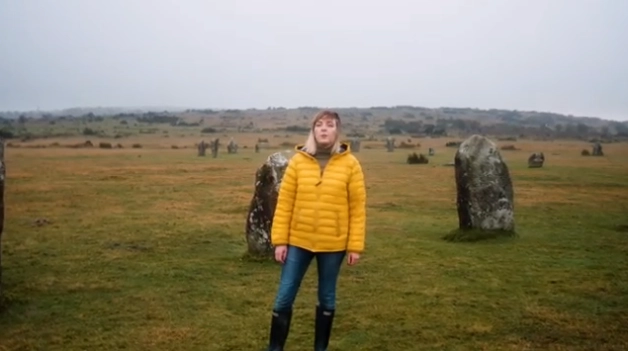 In Cornwall, England, the Hurlers are three stone circles measuring approximately 115, 108, and 138 feet wide. Nearby stand two "Piper" stones, possibly forming an entrance. First recorded in 1584 by John Norden, their builders remain unknown.
Dating the circles is challenging as stone cannot be carbon-dated. Alexander Thom proposed in 1967 that certain alignments between stones correspond to the stars Vega and Arcturus. Based on their declinations, this suggests construction between 2100 and 1500 BC. While their purpose is unclear, little evidence of settlement has been found nearby.
6. The Merry Maidens, St. Buryan, UK
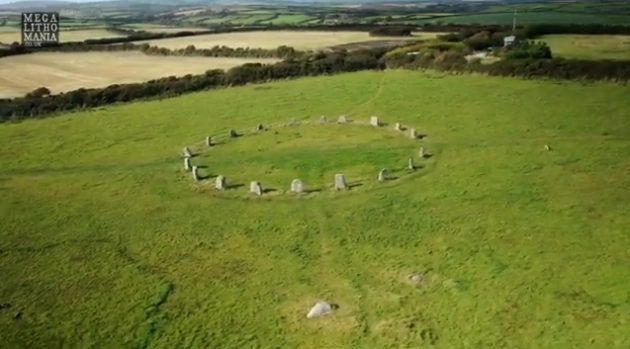 This 80-foot (24-meter) wide circle consists of 19 granite stones, each 4 to 4.5 feet (under 1.5 meters) tall, evenly spaced 10 to 15 feet (3 to 4.5 meters) apart. A second circle once stood 700 feet (213 meters) away but eroded into ruin by the late 1800s.
Named from a legend, it is said 19 women were turned to stone for dancing on a Sunday. Two large "piper" stones stand 1,000 feet (304 meters) northeast, aligned with the circle's center. According to lore, these were the fleeing musicians punished for playing on the Sabbath. The circle's origin and age remain unknown.
5. Oyu Stone Circles, Kazuno, Japan
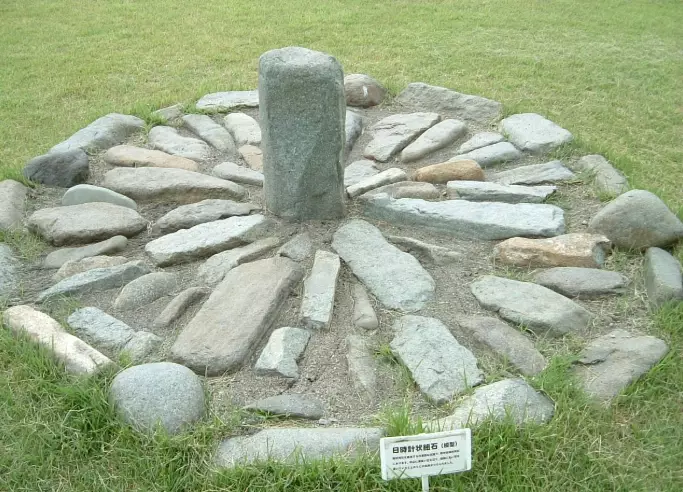 Discovered in 1931, the Manza stone circle in Japan is the country's largest at 45 meters wide. A slightly smaller circle lies about 91 meters away. Both are made of smooth river stones and, like Stonehenge, are rare examples whose function is clearly understood.
Each circle features two concentric rings spaced 8 meters apart. Smaller inner circles are aligned with the summer solstice sunset, enabling the prediction of other solar events like the equinoxes and winter solstice. Carbon dating and artifacts such as stone swords date the site to between 2000 and 1500 BC.
4. Dolni Glavanak Cromlech, Bulgaria
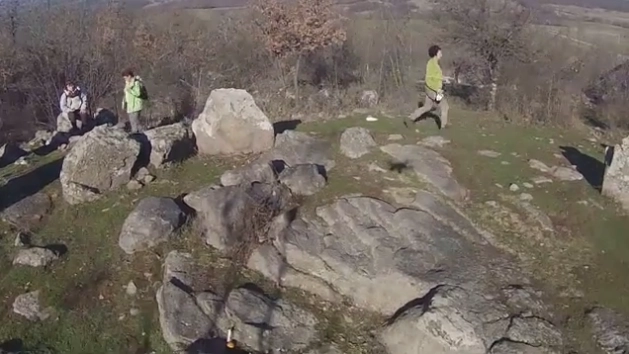 "Cromlech" derives from the Welsh for "arched flat stone," though "dolmen"—from Cornish "hole of stone"—is more common. Dolmens are found worldwide, often serving as tombs for significant individuals, a practice still seen in Indonesia.
This specific cromlech, discovered in 1998, sits on a wooded hilltop west of Dolni Glavanak. It consists of 12 rhyodacite stones forming a 30-foot ring, with nine still standing. These trapezoidal stones are 4-5 feet tall, connected by horizontal slabs. Excavations revealed bronze tools dating the site to 700-500 BC, while burned human bones suggest it was used for the consecration and disposal of the dead.
3. Boscawen-Un, St. Buryan, UK
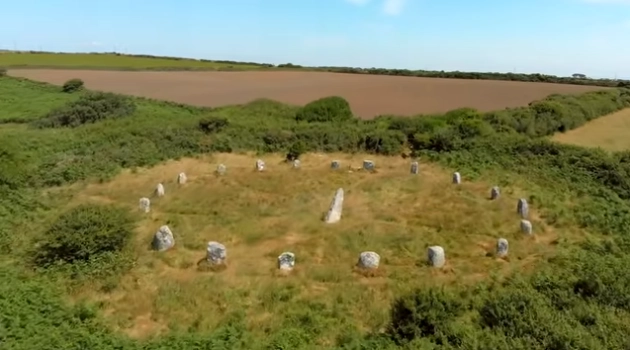 Located about 4 miles northwest of the Merry Maidens, this stone circle resembles a sundial. It consists of 19 standing stones arranged in a rough ellipse, approximately 75 feet in diameter, surrounding a long, leaning central stone. Eighteen of the stones, including the central one, are granite.
A single quartz stone in the southwest, toward which the central stone points, is believed to mark the winter solstice sunrise. During the summer solstice, the Sun uniquely illuminates every stone fully. Although its builders remain unknown, bronze tools found at the site date its construction to the Bronze Age.
2. Rujm el-Hiri, Golan Heights, Israel
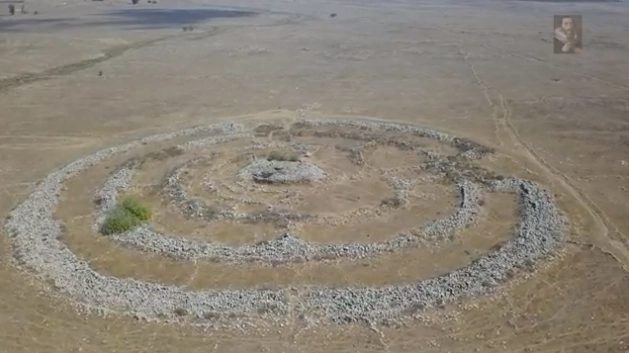 Located about 10 miles east of the Sea of Galilee, this ancient structure—potentially visited by Jesus—consists of five concentric rings made of roughly 42,000 basalt stones, most small enough to carry. The outermost ring spans about 520 feet wide and 8 feet tall, requiring an aerial view to see fully. At its center lies a mound measuring 65 feet wide and 15 feet tall.
The site sits within a vast plateau of hundreds of stone tombs, indicating it was likely a cemetery center. It features two entrances, with the northern one leading along a 20-foot path toward the center, roughly aligned with the summer solstice sunrise—though too imprecise for astronomy. While funerary use is probable, no human remains have been found within the circle.
1. Solstice Archaeological Park, Calcoene, Brazil
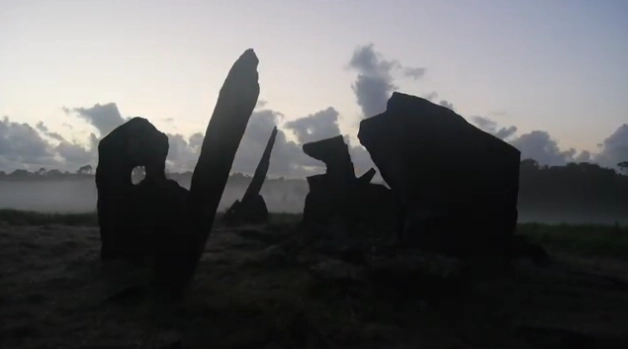 Located about 4 miles north of Calcoene in the Amazon rainforest, this circle of 127 granite stones—some up to 15 feet tall—was discovered in 2006 and nicknamed “the Amazonian Stonehenge.” Its purpose is believed to be astronomical, but cremated human remains found in central pits and urns also indicate it served as a burial site for important individuals.
One stone features a hole that aligns with the Sun only on the winter solstice, casting light onto another rock, while another rock’s shadow vanishes on December 21 when the Sun is directly overhead. The origins of the granite stones and their builders remain unknown, as no other granite exists nearby. Carbon dating of pottery fragments suggests construction occurred between 2000 BC and 500 AD.